
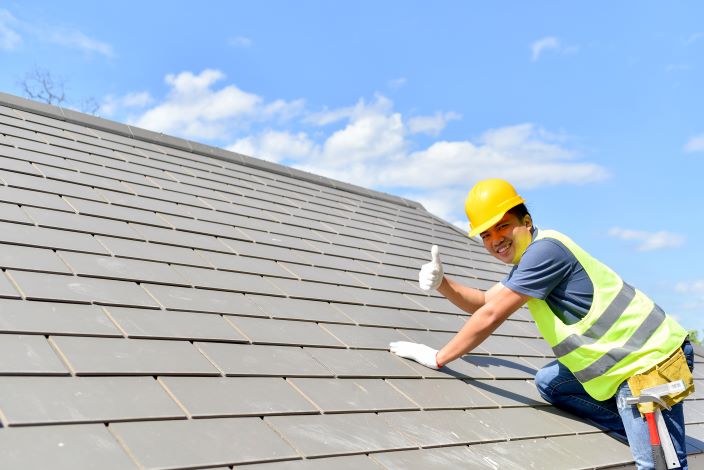
The Importance of Local Expertise
Roofing in Guernsey demands a specialised understanding of the island’s climate and architectural nuances. The local weather, characterised by strong winds and heavy rains, poses significant challenges to roof durability.
Local roofers possess the expertise to select and install materials that can withstand these conditions, ensuring long-lasting and reliable protection for homes and businesses.
Additionally, they are well-versed in local planning regulations and conservation requirements, crucial when working on listed buildings and properties within designated areas.
Roofing Services Offered by Guernsey Companies
Roofing companies in Guernsey offer a comprehensive range of services tailored to the diverse needs of the island’s properties.
Some of the primary services offered –
• Roof Repair and Maintenance: Regular maintenance and timely repairs are essential to prolong the life of a roof. Local roofing companies offer services such as gutter cleaning, moss removal, and the replacement of damaged tiles or slates.
• New Roof Installation: For new builds or renovation projects, Guernsey roofers provide complete installation services. They work with various materials, including slate, tile, and modern synthetic options, to suit the aesthetic and functional needs of any property.
• Flat Roofing Solutions: Flat roofs are popular for extensions and commercial buildings. Guernsey roofing companies specialise in the installation and repair of flat roofing systems, including felt, EPDM rubber, and fibreglass.
• Chimney Repairs and Rebuilds: Chimneys are a common feature in Guernsey homes, and their maintenance is crucial for both safety and structural integrity. Local roofers offer services ranging from minor repairs to complete rebuilds.
• Leadwork and Flashing: Proper leadwork is vital to prevent leaks around chimneys, valleys, and other roof intersections. Guernsey roofing specialists ensure high-quality leadwork that enhances the longevity of your roof.
Types of Roofs
The type of roof chosen for a property significantly impacts its appearance, functionality, and maintenance requirements.
The most common roof types found in Guernsey are –
Based on your description, here is the organized table ready for your WordPress site. This format is designed to be clean, easy to read, and fully compatible with the WordPress Table Block.
Common Residential Roofing Styles
| Roof Type | Description | Key Advantages | Typical Materials |
| Gable Roof | Two sloping sides that form a triangle at the top. | Simple design; effective water/snow shedding; good ventilation. | Asphalt shingles, clay/concrete tiles, metal, slate. |
| Hip Roof | All four sides slope downwards toward the walls. | High stability; excellent for high-wind or stormy areas. | Asphalt shingles, tiles, metal, slate. |
| Flat Roof | Nearly level surface, often with a slight pitch for drainage. | Cost-effective; creates usable space for gardens or terraces. | EPDM rubber, TPO, PVC, fibreglass. |
| Mansard Roof | Four-sided roof with two slopes on each side; lower slope is steeper. | Maximises attic living space; distinctive “French” look. | Slate, asphalt shingles, wood shakes, metal. |
| Gambrel Roof | Similar to Mansard but with vertical gable ends (Barn style). | Maximises attic space; classic, rustic appearance. | Asphalt shingles, wood shingles, metal, slate. |
| Butterfly Roof | Inverted V-shape that resembles butterfly wings. | Modern aesthetic; excellent for rainwater collection. | Metal, asphalt shingles, built-up roofing (BUR). |
| Shed Roof | A single, sloping surface (also called a Skillion roof). | Simple and cost-effective; great for modern extensions. | Metal, asphalt shingles, slate, tiles. |
| Dormer Roof | A vertical window structure projecting from a sloping roof. | Adds natural light and headroom to attic areas. | Matches main roof (shingles, tiles, etc.). |
Roofing Materials
Selecting the right roofing material is crucial for ensuring longevity and aesthetic appeal. The choice of material can influence the overall look, durability, and maintenance needs of the roof. Below is a detailed overview of common roofing materials:
Asphalt Shingles
- Description: Common and affordable, available in various colours.
- Advantages: Easy to install, cost-effective, good fire resistance.
- Lifespan: 15-30 years.
Clay Tiles
- Description: Made from natural clay, shaped, and fired.
- Advantages: Durable, fire-resistant, suitable for Mediterranean and Spanish-style homes.
- Lifespan: 50-100 years.
Concrete Tiles
- Description: Made from concrete, can mimic clay tiles or slate.
- Advantages: Durable, cost-effective alternative to clay and slate.
- Lifespan: 40-60 years.
Slate
- Description: Natural stone, split into thin sheets.
- Advantages: Extremely durable, fire-resistant, attractive appearance.
- Lifespan: 75-200 years.
Wood Shingles and Shakes
- Description: Made from cedar, redwood, or other woods; shingles are machine-cut, shakes are hand-split.
- Advantages: Natural look, good insulation properties.
- Lifespan: 20-40 years.
Metal Roofing
- Description: Made from steel, aluminium, copper, or zinc.
- Advantages: Durable, lightweight, energy-efficient, low maintenance.
- Lifespan: 40-70 years.
EPDM Rubber Roofing
- Description: Synthetic rubber membrane.
- Advantages: Durable, flexible, good for flat roofs.
- Lifespan: 25-30 years.
TPO and PVC Roofing
- Description: Single-ply roofing membranes.
- Advantages: Heat-reflective, energy-efficient, resistant to chemicals and punctures.
- Lifespan: 20-30 years.
Fibreglass Roofing
- Description: Reinforced plastic material, often used for flat roofs.
- Advantages: Lightweight, durable, easy to install.
- Lifespan: 20-30 years.
Green Roofing
- Description: Roof covered with vegetation and soil.
- Advantages: Environmentally friendly, reduces heat island effect, provides insulation.
- Lifespan: Varies, depending on maintenance and plant types.
Styles of Roofs
The style of a roof can significantly affect the visual appeal and architectural harmony of a building.
Here are some popular roof styles relevant to properties in Guernsey:
| Roofing Style | Characteristics | Typical Features |
| Traditional | Utilises materials like slate or clay tiles; commonly seen in older or period properties. | Steep pitches, dormer windows. |
| Modern / Contemporary | Features clean lines; often flat or shed roofs using materials like metal or fibreglass. | Minimalist design, large windows, integration with landscape. |
| Cottage / Country | Includes thatched roofs or wood shingles, evoking a rustic, rural feel. | Low-pitched roofs, wide eaves. |
| Mediterranean | Uses clay or concrete tiles with a distinctive terracotta colour; ideal for warm climates. | Red-tiled roofs, stucco walls. |
| Colonial | Features gable roofs with steep pitches; often uses asphalt shingles or wood shakes. | Symmetrical design, brick or wood facades. |
Choosing the Right Roofing Company
Selecting a reliable roofing company is crucial for ensuring high-quality work and peace of mind. Here are key factors to consider:
- Experience and Reputation: Look for a company with a proven track record and positive customer reviews.
- Certifications and Insurance: Ensure the roofer is certified and carries adequate insurance to protect against any unforeseen issues.
- Local Knowledge: A company familiar with Guernsey’s specific roofing challenges and regulations is invaluable.
- Warranty and Aftercare: Check if the company offers a warranty on their work and provides aftercare services.
Guernsey Roofing Service Price Estimates (2025–2026)
Roofing on the island often carries an “Island Premium” due to freight and waste costs. For 2026, estimated benchmarks include:
The table below outlines estimated price ranges for roofing services:
| Service Category | Specific Job Type | Estimated Cost Range |
|---|---|---|
| Small Roof Repairs | Minor Tile/Slate Repair | £70 – £200 |
| Ridge Tile Replacement (6 tiles) | £135 – £260 | |
| Flat Roof Leak Repair | £1,500 – £2,300 | |
| Flat Roof Installation | Garage Roof (Bituminous Felt) | £750 – £1,000 |
| Extension (EPDM/GRP Fiberglass) | £3,500 – £6,500 | |
| Large Flat Roof (40m²+) | £6,500+ | |
| Slate/Tile Roof Replacement | Pitched Roof Retiling (Concrete) | £6,000 – £8,000 |
| Premium Natural Slate Replacement | £15,000 – £25,000 | |
| 100m² Benchmark (All-in) | ~£14,735 | |
| Chimney Rebuilds/Repairs | Lead Flashing Repair/Replacement | £400 – £600 |
| Specialist Hourly Labor Rate | £45 – £60/hr | |
| New Roof Installation | Terraced House | From £6,500 |
| Semi-Detached/Detached | £10,000 – £22,000+ | |
| Specialist (Sedum/Green or Solar) | £15,000 – £35,000 | |
| Roof Cleaning/Maintenance | Gutter Cleaning | £35 – £80 |
| Routine Inspection & Maintenance | £250 – £350 |
Key Cost Factors to Consider
• Waste Disposal: Disposing of old roofing materials is a major expense. Inert waste (tiles/slate) is £25.00 per tonne at Longue Hougue, while standard mixed waste (felt/GRP) is £371.87 per tonne at Mont Cuet.
• Scaffolding: A standard three-bedroom semi-detached home usually requires £1,200 to £1,800 for scaffolding, though complex projects can reach £3,000 per week.
• Material Shortages: Supply chain issues have historically caused delays and price spikes, particularly for roofing batten, which can require four to five months for delivery.
• Regulatory Requirements: Replacing more than 25% of a roof’s surface typically
———–
Notable Roofing Companies in Guernsey
Here are some reputable roofing companies in Guernsey:
Rihoy & Son Ltd
- Description: One of Guernsey’s longest-established construction companies, offering comprehensive roofing services.
- Services: Roof repair, maintenance, new roof installation, flat roofing, chimney repairs, leadwork.
- Website: rihoyandson.gg
Norman Piette
- Description: A leading building materials supplier also providing roofing services.
- Services: Roof installation, roof repair, flat roofing solutions, and supply of roofing materials.
- Website: norman-piette.com
MLJ Roofing
- Description: Known for personalised service and high-quality workmanship, specialising in both residential and commercial roofing.
- Services: Roof repairs, new roof installations, flat roofing, chimney work, and roof maintenance.
- Contact: Local business directories or social media platforms.
Guernsey Roofing Solutions
- Description: Offers a wide range of roofing services with a focus on customer satisfaction and durable solutions.
- Services: Roof repair, re-roofing, new installations, leadwork, and flat roofing systems.
- Contact: Local listings and direct contact.
The Roofer
- Description: Dedicated to providing expert roofing services, handling various roofing materials and types.
- Services: Roof repair and maintenance, new roof installation, flat roofing, and chimney repairs.
- Contact: Local directories and online presence.
———–
Maintaining a high-quality roof is essential for the protection and aesthetics of any property in Guernsey. Understanding the various types, materials, and styles of roofs, along with the services offered by local roofing companies, can help homeowners and businesses make informed decisions.
By selecting a reliable roofing company with local expertise, you can ensure your roof remains durable and visually appealing, enhancing the unique charm of Guernsey’s architectural landscape.
Whether you need minor repairs, a complete re-roofing, or a new installation, the island’s professional roofers are equipped to meet your needs efficiently and effectively.
Frequently Asked Questions
Do I need planning permission for re-roofing?
Generally, re-roofing a house is considered an exempt development under Class 2 (6) and does not require a formal application, provided specific conditions are met.
These include using natural slate or clay tiles for pitched roofs (bitumen or fibreglass for flat roofs) and ensuring any increase in roof height does not exceed 30 centimetres.
Which materials are best for Guernsey’s maritime climate?
Residents often ask about materials that can withstand high salt content and wind speeds exceeding 50 mph. Natural Spanish slate is a popular choice due to its 75–100 year lifespan and resistance to salt corrosion.
For flat roofs, modern membranes like EPDM single-ply rubber and GRP fibreglass are increasingly preferred over traditional felt.
How do I verify if a roofing contractor is qualified?
Guernsey residents are advised to check if a contractor is a member of the Guernsey Building Trades Employers Association (GBTEA).
For flat roofing, residents often look for installers vetted through the PermaRoof UK network or those enrolled in the Competent Roofer scheme run by the NFRC.
What are the disposal fees for old roofing materials?
Waste disposal is a significant project expense. Under 2026 rates:
• Inert waste (tiles/slates): £25.00 per tonne at Longue Hougue.
• Standard mixed waste (felt/GRP): £371.87 per tonne at Mont Cuet.
• Asbestos: Fees have risen to nearly £1,000 per tonne at Mont Cuet.
Is it better to repair a leak or replace the entire roof?
While repairs save money immediately, specialists often suggest a full replacement if cracks or faults cover 25% or more of the roof surface. Residents also ask if repair will prevent costly “interior damage” to their belongings.
Are there special rules for listed or historic buildings?
Yes. For Protected Buildings or those in Conservation Areas, standard exemptions often do not apply. Any alteration to the exterior of a protected structure typically requires a full planning application to ensure the “special interest” of the building is preserved.
What should be included in a professional roofing quote?
Residents are encouraged to look for detailed, written quotes that explicitly include:
• Labour and materials.
• Equipment hire (specifically scaffolding).
• Waste disposal/management.
• VAT and insurance.
How long do roofing jobs typically take?
Small repairs usually take 1–3 days. A full pitched roof replacement for an average property may take 3–4 weeks, depending on the number of workers and the complexity of the pitch.
How do I handle emergency repairs after a storm?
Following events like Storm Goretti, residents ask about emergency call-out procedures. Local roofers often prioritise cases with active water ingress or those affecting vulnerable neighbours, and they frequently request photos via WhatsApp to quickly assess damage and scaffolding needs.